Skill Rating and Game Styles
Your stroke repertoire—and more specifically, the distribution of outcomes and learning stage reflects a user's skill level and game style.
CueMate’s stroke map and skill status concepts make it possible for users to determine their skill level and game style.
CueMate processes this information to determine a skill rating. The skill rating describes your level of proficiency for each stroke category (ground strokes, volleys, and serves).
The skill rating, in turn, is also used to automatically generate training goals to help users get on a path that will improve their skills effectively.
Skill Rating
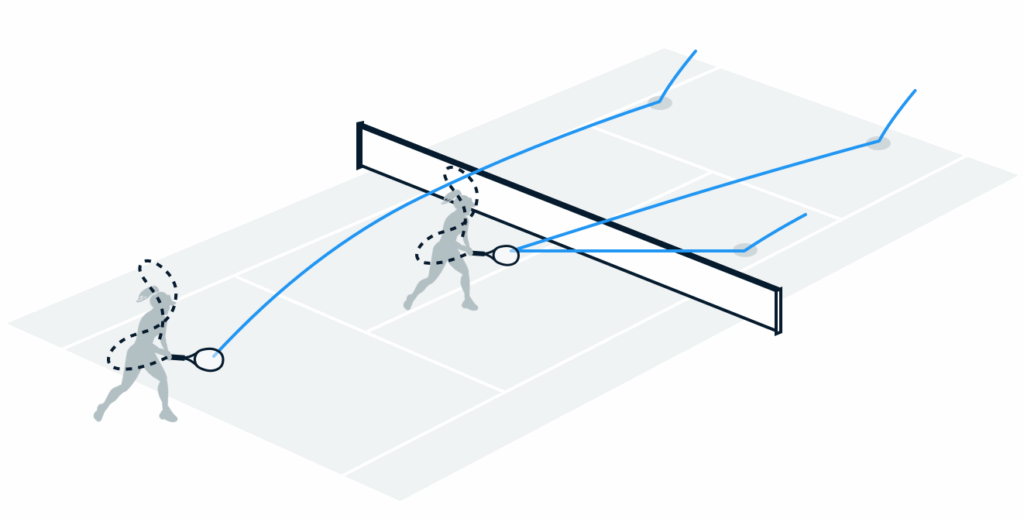
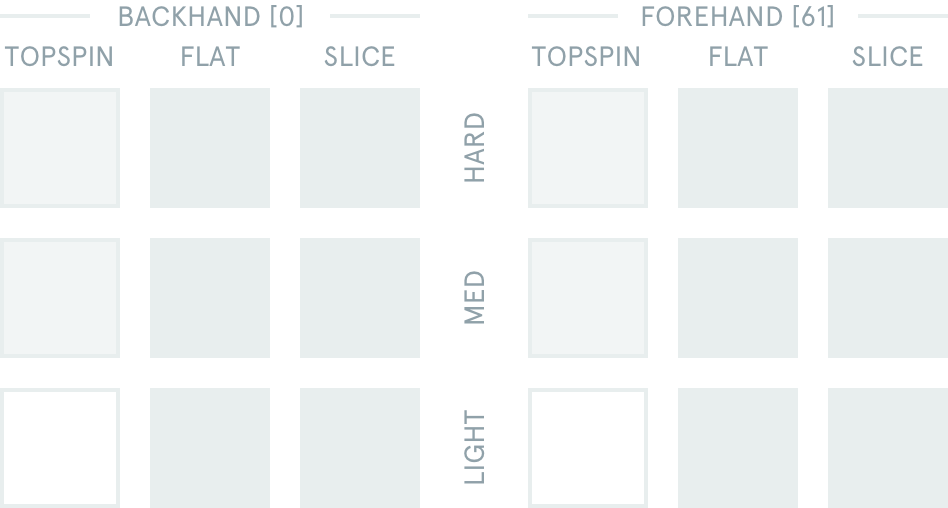
Novices and beginners tend to have lower-intensity strokes with more flat shots and less topspin. As players gain experience, they learn to generate topspin, which allows for greater intensity, higher pace, and better control of their shots.
Rating System Principles
Recall from the learning model [link] that the brain learning process follows an evolutionary process, as shown in the figure.
[Add figure]
CueMate uses the repertoire composition and learning stage to determine a rating level.
As shown here, the rating level has five levels: novice, beginner, intermediate, advanced, and expert.
Since the rating is based on a holistic analysis of the user's.
Rating-Based Training
The rating system enables guiding training by determining training goals that promote higher rating levels.
Rating-based training takes users from where they currently are and puts them on a training path that is consistent with their skills and styles.
Game Styles
The stroke repertoire also reflects game styles, therefore, CueMate can distinguish the game styles of players as part of their profile.
Some typical game styles include:
- All Court Player
- Aggressive Baseliner
- Counter Puncher
- Net Rusher
All Court Player
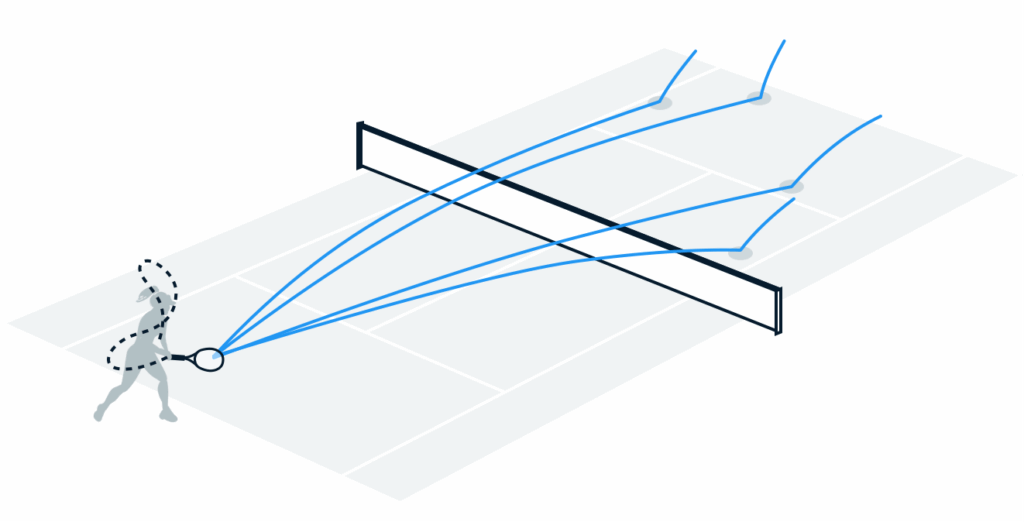
Uses widest variety of stroke types on the stroke map. Goal is to break opponent’s rhythm using creativity with stroke type selection.
Aggressive Baseliner
More likely to use pace over spin to control shots, and a narrower variety of stroke types. Goal is to put opponents under pressure and throw them off balance.
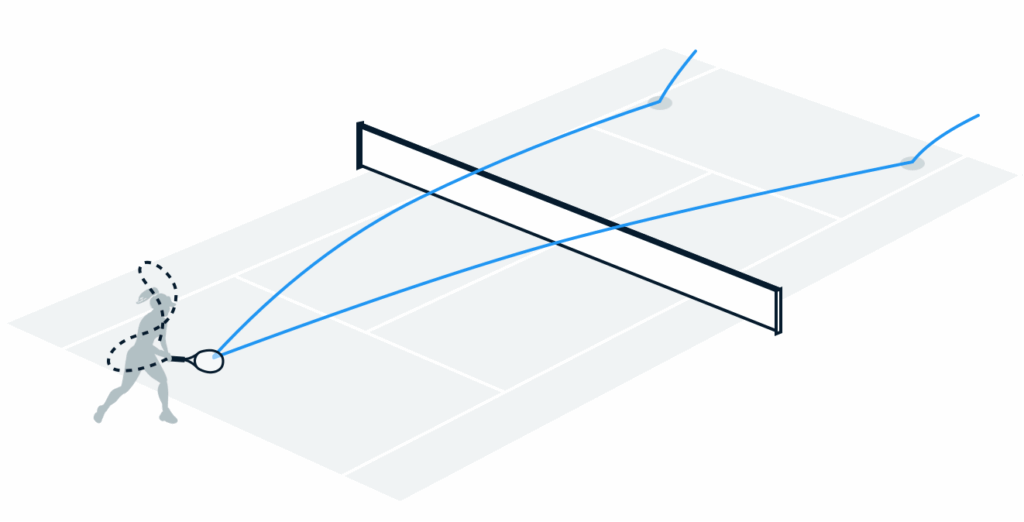
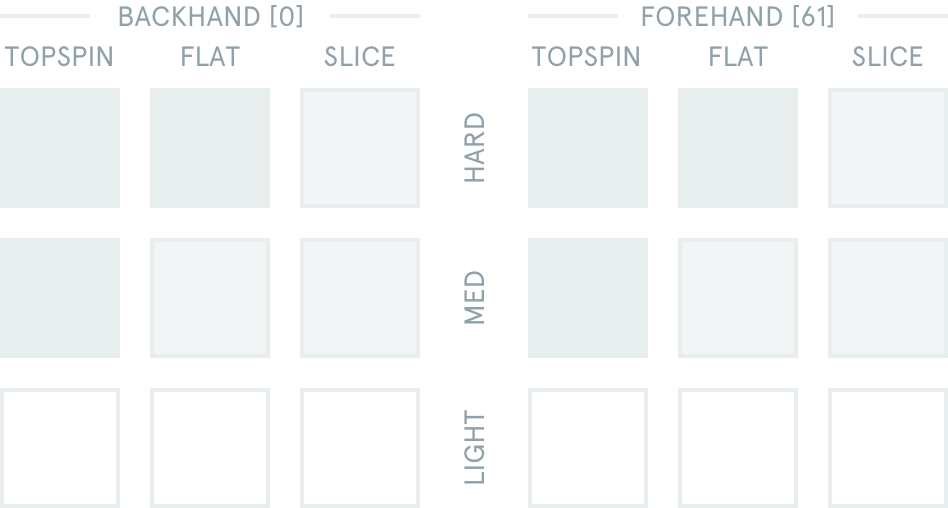
Counter Puncher
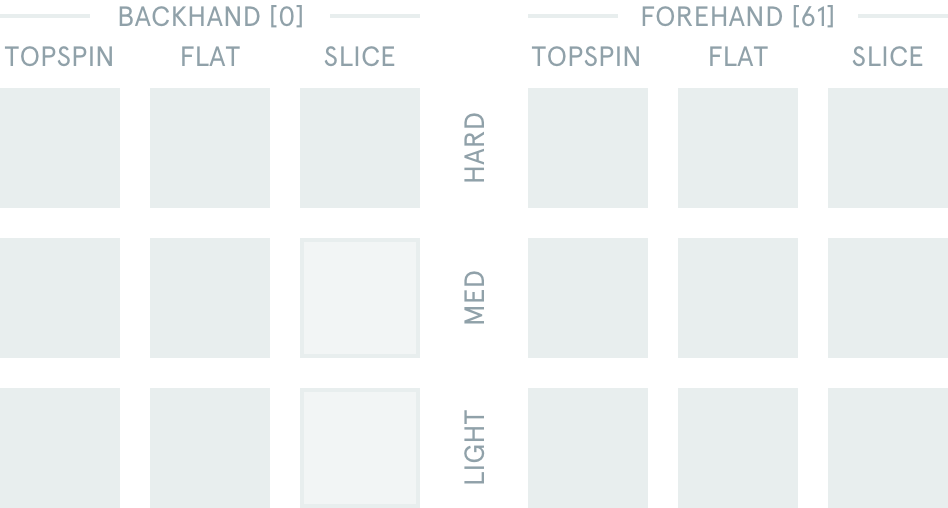
More likely to use spin over pace to control shots, and a narrower variety of stroke types. Goal is to get the ball back in play and force opponent errors by making them impatient.
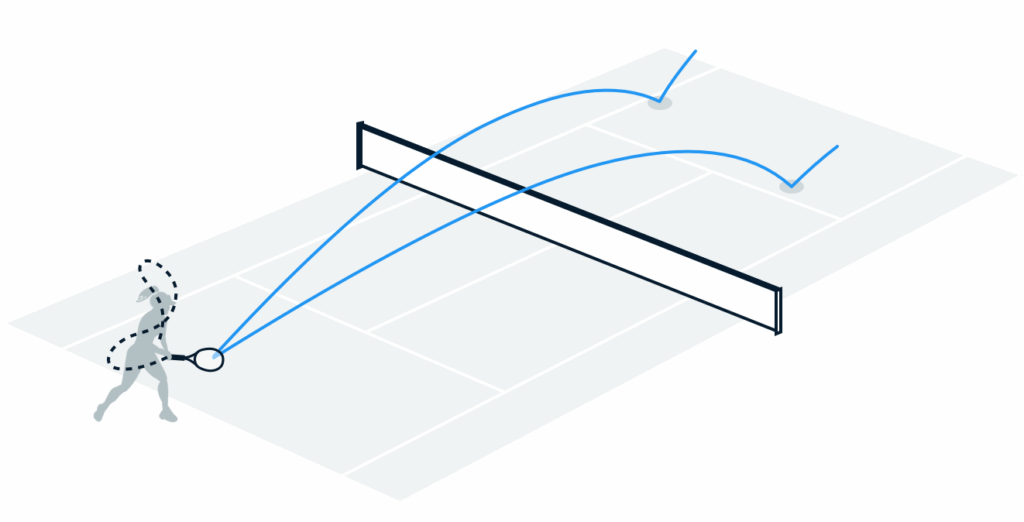
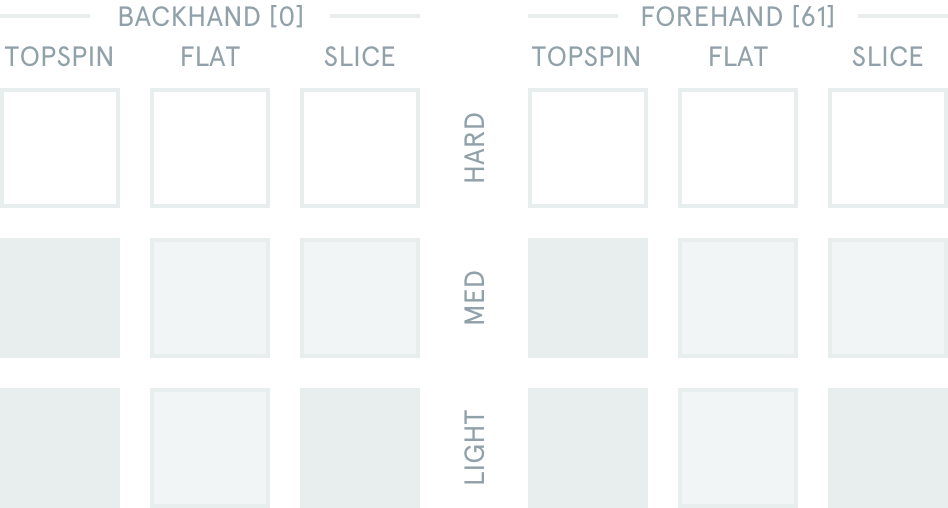
Net Rusher
Uses hard and light pace stroke types on the stroke map, and not likely to use medium pace strokes. Goal is to find next best opportunities to approach the net and execute points.